Have you heard about the return of Starlog Magazine?
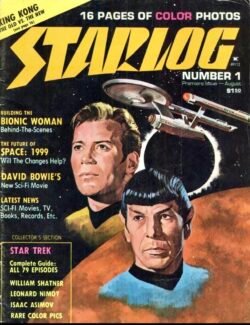
Fifty years ago this month Starlog Magazine debuted on newsstands and my then-21-year-old self picked up that first issue. I wish I still had it, it would be a true collector’s item, but it long ago left my possession for parts unknown.
I read and enjoyed Starlog magazine over the next 33-plus years, mostly because it usually featured articles and photos from the various Star Trek shows over the years. But also because it also covered a wide range of science fiction TV shows, movies, books, cartoons and even comic books throughout its run.
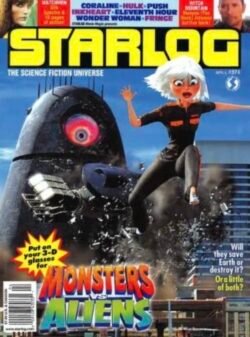
Their last print edition was number 374, published in April of 2009. You can see the vast difference in the cover of the first issue and that of its last. Interestingly, to me, is that the last issue featured an article on a new, at that time, TV show called Fringe. The same Fringe TV show that Cindy and I are currently watching.
Last month the announcement was made that we could expect the return of a printed Starlog Magazine in November of this year, to be accompanied by a podcast.
Editor-In-Chief Annalee Newitz said about the return of Starlog Magazine:
“What is required of a magazine is to have something that you can’t get online, and that’s really thoughtful, engaging articles and beautiful, full-color images that just pop off the page…We’re going to have a healthy dose of articles about cutting-edge science, speculating with scientists about where we’re headed next. And we’re also going to have deep-dive essays from experts about all your favorite movies and books.”
Newitz is an American journalist, editor and author of both fiction and non-fiction. In addition to co-founding Other, a periodical that ran from 2002 until 2007, they have also written for Popular Science, Film Quarterly, and Wired, among others. I have enjoyed the articles by them I have read over the years.
It sounds to me like the return of Starlog Magazine will be a combination of hard science and science fiction, which would be an interesting mixture. I’m curious to see how it is received with an audience that usually leans to the fiction side of science.


Pingback: Volunteer Position, White, GA August 16-31, 2026 -